Blog

Joe's Food Blog
Tampilkan postingan dengan label makanan. Tampilkan semua postingan
Tips Membuat Gulai Ceker Ayam Pedas Ala Padang Masakan dari ceker atau kaki ayam yang diolah menjadi sup menjadi makanan favorit keluarga, namun ceker ini juga tak kalah enak bila diolah dengan kuah santan. Ceker yang digulai dengan santan ini akan terasa lebih nikmat apabila cekernya dimasak hingga empuk. Berikut tips membuat gulai ceker ayam ala Padang.
Bahan dan Bumbu Gulai Ceker Ayam :
    ½ kg ceker ayam
    60 ml santan kental
    1 sdm minyak untuk menumis
    4 sdm kecap manis 
    ½ sdt garam
    ½ sdt merica
    ½ sdt perasa ayam 
    400 ml air
Haluskan :
    4 buah cabe merah, buang biji
    4 butir bawang merah
    3 siung bawang putih
    1 sdm ketumbar
    1 cm pala
    1 cm lengkuas
Cara Membuat Gulai Ceker Ayam
Bersihkan ceker, potong kuku dan rendam dengan air perasan jeruk nipis hingga 15 menit lalu rebus hingga 30 menit, angkat dan tiriskan. 
Tumis bumbu halus hingga harum, tuang air dan santan kental, aduk rata. Masukkan ceker, beri garam, merica dan royco ayam sambil diaduk supaya santan tidak pecah. Tambahkan kecap dan terus aduk hingga bumbu menyerap dan masakan matang. Angkat dan sajikan.
selamat mencoba:)
by(sym)
Indomie is a brand of instant noodle by Indofood, the largest instant noodle manufacturer in Indonesia with 72% of market share.[1] It is distributed in Australia, Asia, Africa, New Zealand, the United States, Canada and European and Middle Eastern countries. Outside its main manufacturing plants in Indonesia, Indomie is also produced in Nigeria since 1995 where it is a popular brand and has the largest instant noodle manufacturing plant in Africa.
Indomie.png


History

Instant noodles were first introduced into the Indonesian market in 1969.[2] Indofood is one of Indonesia's largest pre-packaged food companies, and was founded in 1982 by Sudono Salim, an Indonesian tycoon that also owned Bogasari flour mills. Indomie instant noodle brand was first launched in 1982 with Indomie Kuah Rasa Kaldu Ayam (Chicken stock) flavour, followed by Indomie Kuah Rasa Kari Ayam (Chicken curry) flavour. In 1983 Indomie launched its first dry (served without soup) Indomie Mi Goreng variant, which quickly become popular in Indonesian market.[2] Indomie has become a household name for instant noodle in Indonesia, and accounted for around 70 percent of instant noodle market shares in Indonesia.[3] Indomie has won several awards, among others are Indonesia Best Brand Award (IBBA), The Most Effective Ad, Indonesia Consumer Satisfaction Award (ICSA), and Indonesia Best Packaging Award.[4]

Description

Indomie is a form of instant noodle spiced for the Indonesian palate. The most popular flavour is Indomie Mi goreng, followed by Indomie Soto Mie (Noodle Soto flavour), Indomie Ayam Bawang (Onion Chicken), Indomie Kari Ayam (Chicken Curry), Indomie Kaldu Ayam (Chicken stock) and Indomie Ayam Spesial (Special Chicken).
Indomie claims to be made from high quality flour supplied by Bogasari flour mills, meeting international standards, and fortified with vitamin A, B1, B6, B12, niacin, folic acid and iron.[5] Indomie is certified as halal byMajelis Ulama Indonesia, certified ISO 9001:2001 and HACCP from SGS.[5]
However, just like many instant noodles, Indomie contains high levels of carbohydrate, sodium and fat (in the oil seasoning). Without additional ingredients such as eggs, meat and vegetables, its nutrient value is poor, with low protein and dietary fibre. It also containsphenylalanine and monosodium glutamate (MSG; listed as flavour enhancer 621).[6]

Naming and slogan

]"Indo" stands for "Indonesia" and "mie" stands for "noodles" in the Indonesian language, therefore "Indomie" stands for "noodles from Indonesia or Indonesian noodle". Both Indomie and IndoMie can be used to describe the brand. Several advertisements in Indonesia show a variety of customers eat Indomie, usually ended by the chorus "Indomie, Seleraku", "Majulah Indonesiaku" (Indonesia Independence Day only), and "Maafkan Lahir Batin" 

Varieties[
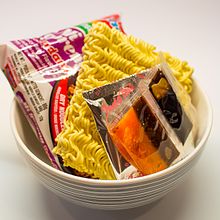

The contents of a packet of mi goreng rendang
Indomie noodles comes in a variety of brands and flavours.[7] Currently, there are around 38 flavours of Indomie instant noodle variants available in the market,[8] with some variants production has been discontinued. Indomie brand is divided into 7 product categories; Indomie goreng (fried noodle served without soup), Indomie kuah (with soup), Indomie Jumbo (large), Selera Nusantara and Kuliner Indonesia (Indonesian cuisine), Mi Keriting(premium curly noodle), and "Taste of Asia".
Indomie Mi Goreng is the instant version of Indonesian mie goreng (fried noodle); flavours include Mi Goreng Sate and Mi Goreng Rasa Ayam (Chicken).[9] Indomie Kuah refer to soupy variants of Indomie. Flavours includeRasa Ayam Spesial (Special Chicken Flavour), and Rasa Baso Sapi (Beef Meatball Flavour).[10]
Indomie Jumbo is larger variant with net weight 127–129 gram, flavours include Mi Goreng Spesial Jumbo (Special Fried Noodle Flavour), and Mi Goreng Jumbo Rasa Ayam Panggang (Grilled Chicken Fried Noodle Flavour).[11] Indomie Selera Nusantara refer to Indonesian traditional cuisine variants; flavours include Mi Rasa Soto Banjar (Banjar Soto Flavour) from South Kalimantan, Mi Rasa Cakalang (Skipjack tuna Flavour) from North Sulawesi, Mi Rasa Dendeng Balado(Dendeng Balado Flavour) from West Sumatera, and Mi Rasa Soto Lamongan(Lamongan Soto flavour) from East Java.[8] Mi Keriting, which means "curly noodle", is the premium variant with additional toppings; flavours include Mi Keriting Goreng Spesial (Special Curly Fried Noodle Flavour) and Mi Keriting Rasa Ayam Panggang (Special Curly Fried Noodle with Grilled Chicken Flavour).[12]
"The Taste of Asia" range includes flavours such as Korean Bulgogi Flavour Fried Noodles and Thai Tom Yum Flavour Noodles Soup.[13]The Kuliner Indonesia range includes Mi Goreng Rasa Dendeng Balado (Spicy beef) (since 2014) and Rasa Soto Lamongan (Lamongan Soto Flavour) (since 2014).[14] Crunchy variants include Mi goreng Kriuuk Ayam and Mi goreng Kriuuk Bawang. Vegan variants include Mi Goreng Vegan (Vegetarian Fried Noodles) and Rasa Sup Sayuran Vegan (Vegetables Flavour).

Mi Goreng
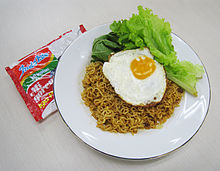

Cooked Indomie Mi Goreng Iga Penyet (Indonesian Spicy Ribs) flavor, served with fried egg and vegetables.
The "Mi Goreng" ("stir fry") range of instant noodles by Indomie entered the market in 1983 and are distributed in North America, Europe, Africa, Australasia and various regions in Asia. The brand name "Mi goreng" isIndonesian for "fried noodle", and is based on the Indonesian dish Mie goreng. The brand flavours are sold in varying weight packets, around 85g, and contain two sachets of flavourings. The first sachet has three segments and carries the liquid condiments: sweet soy saucechilli sauce, and seasoning oil with garlic flakes. The other sachet has two segments for dry seasoning powder and flake of fried scallion. In some regions, Indomie Mi goreng is also available in jumbo (120 gram) packs.[15]
In 2006, Indomie launched a new variant Indomie Mi Goreng Kriuuk.. 8x. In this product, 8x means "Lebih banyak, Lebih renyah, Lebih gurih, Lebih gede" ("more noodles, crunchier, more delicious, larger"), in three flavours: Chicken, Onion, Spicy. Indomie Mi Goreng is certified halal.
Indomie Mi Goreng contains phenylalanine, so individuals suffering from phenylketonuria should avoid the seasoning. Indomie Mi Goreng also contains monosodium glutamate (MSG, listed as flavour enhancer 621).
Additionally flavour enhancer 631 can be prepared from meat extract and/or dried sardines, but it can also be created via a microbial synthesis process from a vegetable source,[16] and flavour enhancer 627 is isolated from sardines and/or yeast extract. The inclusion of flavour enhancer 631 and the way it was prepared means Indomie Mi Goreng may or may not be suitable for vegetarians and vegans.

Pop Mie

Indomie cup noodle variety is called Pop Mie (Indomie Cup in Egypt, Syria and Saudi Arabia; Handy Indomie in the Virgin Islands); it comes in a variety flavours including Mi goreng Spesial (Special) and Mi goreng Pedas (Spicy).
Pop Mie was first introduced in Indonesia in 1991, and it is now available in 8 regular flavours and 3 mini flavours.

This is seblak from Bandung!!!


Of you may be new to this cuisine, one Seblak is the crackers accidentally dibantatkan. This food is very popular nowadaysespecially in Bandung, because from there the food was born. This meal is   actually a kind of culinary food service is most oftenfound in the street vending or wheelbarrow.

 
Seen from the manufacturing process was not reasonable, because crackers are usually deep fried and crunchy-textured,transformed into forms such as stir-stir or wet pasta with a spicy taste. Seblak is actually not always using its main ingredient, ascrackers could be varied with chicken claws or wings, sausage, meatballs and macaroni soggy. But for this time, we will use the main ingredient as crackers.
 
Here we will give you a little recipe how to make Seblak crackers which is certainly  tasty and have a taste that is spicy.
 
As usual we will prepare ingredients in advance, are as follows:
 
Materials make seblak:
 
100 grm crackers aci raw
Hot water
4 tsp salt
1 tsp bouillon powder
200 ml water
8 eggs chicken
1 tsp granulated sugar
8 Tbsp cooking oil
4 leeks, finely sliced
 
Seblak seasoning ingredients to mashed:
 
4 red-tomato fruit
4 pieces of pepper curls
2 cm in size kencur
20 cloves garlic
12 pieces of cayenne pepper
 
If all the ingredients are ready, then we have to do all the materials to cultivate living into one.
 
The boiled crackers with hot water to the Pan or skillet until tender. After it was adopted and then drain.
Blender or spice up all the ingredients ulek crushed and finely textured.
Heat oil in frying pan, Saute frying spices last stir until blended and the fragrant smell
Put the egg. Stir until the egg disintegrates and well blended with herbs of yesteryear
After seasoning has a fragrant smell, then input the crackers along with tuangi with water. Next sprinkle the grams of sugar, andpowdered broth. Saute all such material to seep into the crackers. Add the sliced leeks, stir again until well blended. Thenremove and serve with your favorite container.
 
How to make an easy, not to make it, the ingredients are also very easy once obtained in shops or stalls of vegetables. Seblak is most fitting be enjoyed whilst still hot or let stand briefly to warm. Fits all eaten on the weather right now, as the rainy seasonbody warmers snacks, as well as pengobat hunger, of course.
 
Good luck and continue to follow recipes-next cooking recipes only here!

1.Massaman Curry (Thailand)

Thailand is known for their spicy, sweet and overall delicious curries representing the colors of the rainbow including red curry, yellow curry, and green curry. However, my personal favorite is the famous Massaman Curry, a soupy meat dish cooked with coconut milk, peanuts or cashews, potatoes, bay leaves, cardamom, cinnamon, star anise, sugar, fish sauce, chili and tamarind served with rice. Beef is the traditional meat used in the dish, but it’s not uncommon to see it served with other meats or vegetables.

2.Pho (Vietnam)

Pho is a rice noodle soup served with beef or chicken and is typically eaten for breakfast. While the soup may seem pretty standard it’s an art form that you can decorate the finishing with with basil or mint leaves, bean sprouts, onion, lime and chili. For less than a $1 a bowl, there’s no better way to start the day slurping up the delicious soup.


3.Curry Laksa (Malaysia)


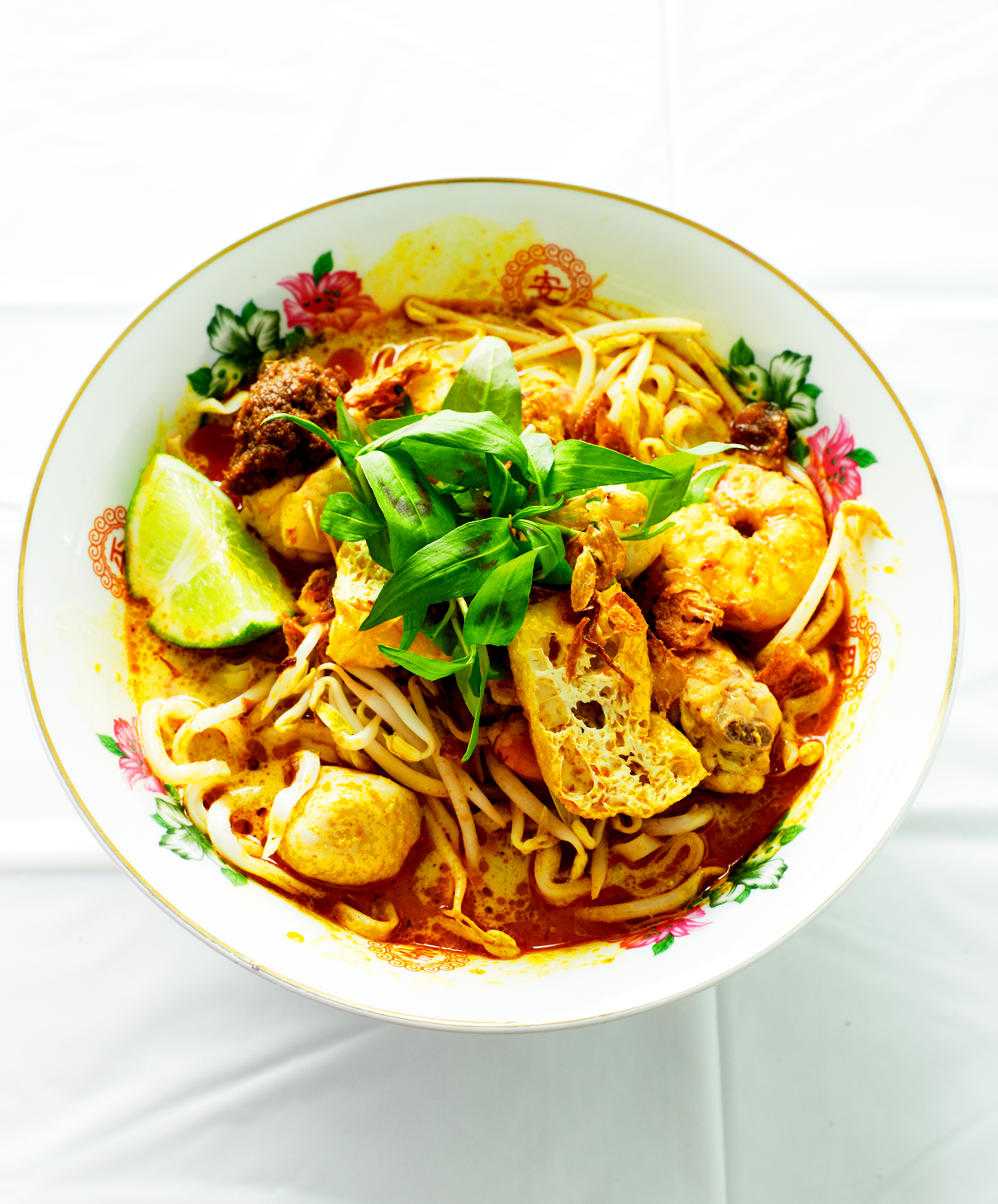
Laksa is a type of thick rice noodle which is used in the famous Malaysian Curry Laksa, a coconut based curry soup. Street vendors and restaurants serve the soup typically with fish, tofu, or chicken and heaping spoon fulls of chili paste, coriander, and laksa leaf giving it that distinct spicy flavor.


4.Chicken Tikka Masala (Malaysia)


Malaysia’s cuisine is a culinary blend of Chinese, Indian, and Malay so you don’t have to be in India to enjoy Chicken Tikka Masala. Baked tandoori chicken chunks blended in a spicy cream sauce with tomato and coriander gives the dish a savory and buttery flavor. Indian flat bread such as naan, chapati, or roti are commonly used to slop up the masala when eating with your hand (right hand only).

5.Amok (Cambodia)


Amok is a thick sauce dish prepared with a freshwater fish (usually Mekong catfish), coconut milk, chili, onion, lemongrass, garlic lime, and traditional Cambodian spices. It’s served either in a banana leaf or coconut and is not as spicy as other Cambodian dishes.


6.Bonus Drink: Vietnamese Coffee (Vietnam)

Add caption


If you’ve never had a Vietnamese coffee, you’re missing out! Finely ground Vietnamese-grown dark roast coffee is placed into a French drip filter, slowly dripping the coffee into another cup. You can drink it as is, add sweet condensed milk and/or pour over ice.


7.Frog’s Legs (Vietnam)


Okay, so perhaps it wasn’t the best idea ordering frog’s legs from a restaurant next to a dirty creek bed, but anything fried has to be safe right? Wrong! For the next five days, my husband lived in the bathroom. It was horrific. Now, that’s not to say frog legs are bad everywhere, just be safe about where you order them and more importantly where the frogs come from.


8.Questionable Meat Stick (Thailand)


If I could eat chicken satay everyday of my life, I’d be a happy camper. However, I did try some very questionable meat sticks in Bangkok that made me wonder what the heck I was chewing on. If you’re going to do the meat stick thing, stick to chicken or a recognizable meat. Don’t agree? Let me know in the comments below.

9.Ant Soup (Indonesia)

 While I’m still not sure if we ordered wrong or the place was just filthy, but it appeared that a thousand little ants marched right into our Ant Soup. We ordered our Ant Soup in Bali, but after I did a little research it’s common all throughout Southeast Asia and is made of ant eggs.


10.McDonald’s (Everywhere)

 There’s no taste like home, and as much as I hate to admit it six months into our trip we cracked and ate at McDonald’s. While Southeast Asia has some of the best cuisine in the world, we just wanted a little familiarly of home and some cheese, which is not something you’ll find a lot of in Asia. Overall, it tasted exactly the same as back home, is fake food, and was expensive. Looking back, we’d rather have spent a quarter of the price on some local street food.


11.Bonus Drink: Bali Coffee (Indonesia)


 Unless you like slurping on sludge and coffee grounds, skip the Balinese Coffee. It’s more like instant coffee that doesn’t dissolve. Stick to tea instead. Cheers


 baca juga:best indonesian foods!!!

Sarapan sangat penting untuk mengisi energi Anda sebelum beraktivitas. Tapi kebanyakan orang tidak terbiasa melakukan sarapan. Mereka mempunyai banyak alasan seperti tidak bisa makan berat di pagi hari, terburu-buru. Padahal efek tidak sarapan sangat bahaya bagi kesehatan tubuh Anda. Anda menjadi kurang energi, lemas, dehidrasi dan konsentrasi menurun.
Sarapan tidak perlu yang berat-berat asal perut terisi Anda sudah siap untuk melanjutkan aktivitas. Ada beberapa makanan penggangi nasi yang cocok untuk menemani sarapan Anda. Bahkan Anda cukup membuatnya dalam waktu singkat. Berikut ini makanan pengganti nasi untuk sarapan Anda:
1. Smoothie
 Segar manis dan creamy serta mudah dicerna seperti smoothie. Blender buah dan susu, atau beli smoothies dalam kemasan botolan. Cari yang mengandung gula kurang dari 30 gram per porsi, serta mengandung protein untuk memperlambat tubuh menyerap gula, sehingga Anda bisa kenyang lebih lama. Minumlah secara perlahan untuk mendapat asupan vitamin dan mineral.


2. Sereal dan Susu


 Menu ini cukup mudah Anda siapkan pada pagi hari. Jika Anda memiliki sereal instan Anda cukup mencampurkannya dengan susu. Namun jika Anda ingin kandungan lebih lengkap Anda bisa menggunakan sereal whole grain yang berserat tinggi dan rendah kadar gula, serta buah kering atau kismis, untuk susu Anda gunakan susu rendah lemak.


3. Buah dan Yogurt


Kandungan buah yaitu berjuta vitamin. Anda bisa menambahkan yogurt plain tanpa lemak atau greek yogurt yang rendah lemak, dan sereal. Jika ingin menu lain Anda bisa membuat salad buah dengan buah-buahan segar. Dengan sarapan ini Anda cukup merasa kenyang hingga siang hari.


4. Oatmeal
 Oatmeal cukup praktis dibuat dan cocok untuk Anda yang sedang dalam program diet. Cara membuatnya siapkan oatmeal instans secukupnya, kemudian 1 buah apel yang dipotong kecil, satu sendok kismis kering, 1 sendok makan sirup maple atau sirup buah lain, bubuk kayu manis secukupnya, terakhir susu rendah lemak. Campurkan semua bahan tersebut ke dalam satu mangkuk. Pertama kali oatmel yang dituangi susu aduk hingga menjadi bubur kemudian masukkan bubuk kayu manis, kismis, apel dan sirup.


5. Sandwich

Cara membuat sandwich juga tidak membutuhkan waktu lama. Pertama Anda siapkan bahan 2 lembar roti tawar atau gandum, irisan bawang bombai, telur rebus setengah bagian, 2 irisan tomat, 1 lembar keju, daun selada dan minyak olive.
Panggang roti olesi dengan minyak olive, setelah dipanggang roti tersebut dialasi daun selada, susun bertumpuk mulai dari telur, tomat, irisan barang bombai, terakhir keju kemudian tutup dengan 1 lembar roti yang lain.
Jenis makanan diatas juga bisa dikreasikan sesuai selera Anda. Indonesia sendiri terdapat berbagai macam menu sarapan yang berbeda-beda disetiap daerah. Makanan-makanan khas Indonesia
 tersebut bisa Anda dapatkan di pagi hari di sepanjang jalan Anda memulai aktivitas. Selamat mencoba!

by(sym) 
Hear the name of this food may be making you feel strange "Rice Fart", but do not let you think this meal is rice dikentutin rice or smelling farts

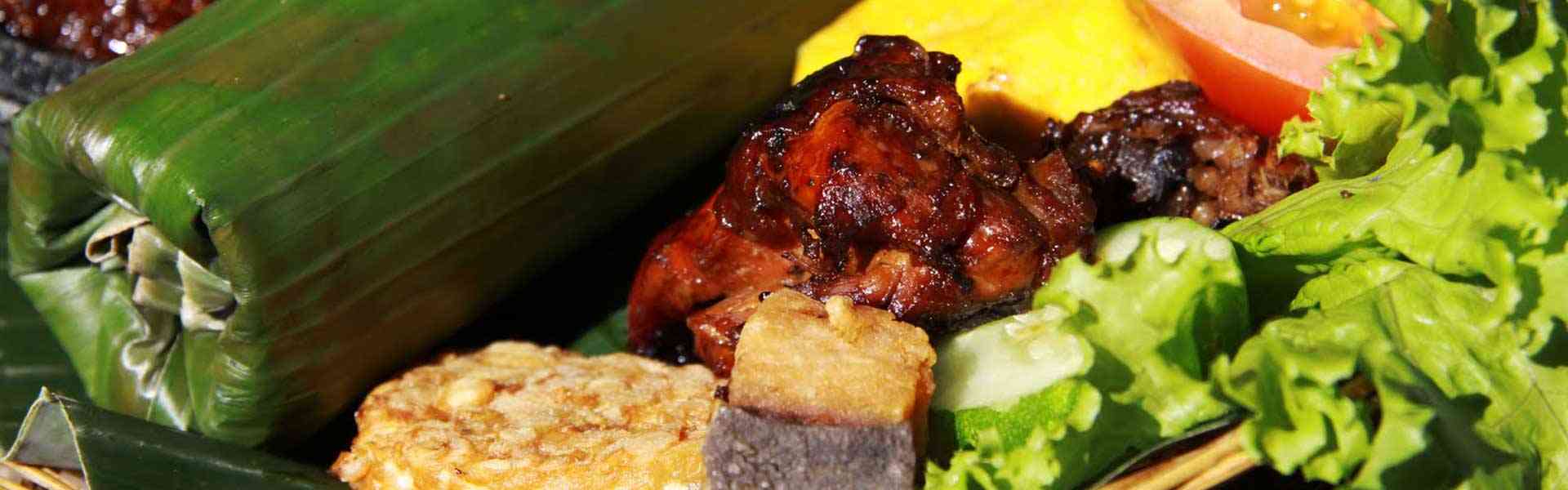
Hasil gambar untuk nasi kentut ala restoranRice rice Field typical fart a fluffier texture that accompanied the spices wrapped leaf with the aroma and flavour of the patisseries. This rice comes with a variety of side dishes such as fried fish, chicken and so on.

 Hasil gambar untuk daun kentut

Previous PostPostingan Lama Beranda